Marked Without Cause: How Verification Databases Trap Innocent Americans and What Can Be Done About It
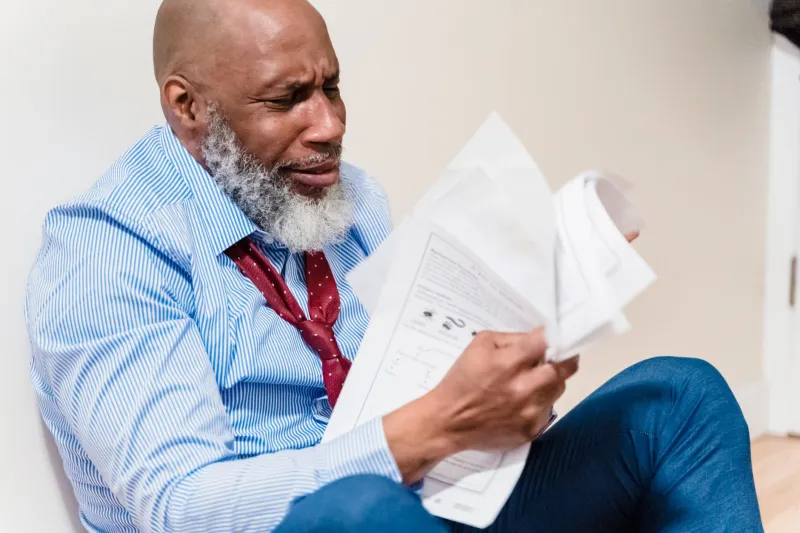
For most people, a background check is an invisible formality—something that happens quietly in the background of a job application or lease agreement, producing no friction because there is nothing adverse to find. But for a growing number of Americans, the experience is something else entirely: a sudden, unexplained denial, a withdrawn offer, or a landlord who stops returning calls. The culprit, when it is eventually identified, is often a data error buried inside a verification system that was never designed to be challenged.
This is not a fringe problem. The Federal Trade Commission has estimated that roughly one in five Americans has a material error on at least one of their consumer reports. Background screening databases, which draw from court records, credit files, address histories, and dozens of other data sources, are subject to the same contamination risks—compounded by the speed at which that data is aggregated, sold, and re-sold across the industry.
How Innocent Records Become Tainted
The most common pathway to a false positive is deceptively simple: name matching. Automated screening systems frequently flag individuals who share a name with someone who carries a genuine adverse record. A man named James R. Williams in Atlanta may find himself associated with the criminal history of a different James R. Williams who once resided in the same ZIP code. The algorithm sees a plausible connection. The hiring manager sees a red flag. The applicant sees a door close.
Identity theft introduces a more insidious variation. When a fraudster uses a stolen Social Security number to open accounts, incur debt, or even commit crimes, the victim's file absorbs the consequences. Court records and collection entries generated under a stolen identity can persist in screening databases for years—long after the theft has been reported and theoretically resolved. The victim must then prove, repeatedly and to multiple institutions, that the record does not belong to them.
Data entry errors represent a third vector. Courthouse records digitized from handwritten documents are vulnerable to transcription mistakes. A conviction expunged by court order may remain active in a third-party database simply because the screening company never received notice of the expungement or failed to process it. In some documented cases, individuals have had the criminal records of a deceased person appended to their file due to a Social Security number recycling error.
The Bureaucratic Obstacle Course
Discovering an error is only the beginning of the ordeal. The Fair Credit Reporting Act (FCRA) grants consumers the right to dispute inaccurate information with consumer reporting agencies, and those agencies are legally required to investigate disputes within 30 days. In practice, however, the investigation often amounts to little more than re-verifying the original data source—which may itself be incorrect.
Consider the case structure that advocacy organizations have documented repeatedly: an individual disputes a criminal record that does not belong to them; the screening company contacts the court that supplied the data; the court confirms its records show what they show; the screening company closes the dispute as verified. The individual, now armed with the correct documentation, must often pursue litigation to compel a correction. Legal fees, time, and emotional strain accumulate in a process that can stretch across months or years.
During that period, the consequences compound. A person wrongly flagged as a credit risk may be denied housing, forcing reliance on costlier or less stable alternatives. A candidate erroneously associated with a fraud conviction may be passed over for financial-sector employment, even if the error is eventually corrected. The economic damage from a false positive is not theoretical—it is measurable and, in many cases, permanent.
The Business Side of the Equation
Organizations that rely on third-party screening services often assume that the data they receive is accurate by default. That assumption is both operationally understandable and legally dangerous. Under the FCRA, employers and landlords who take adverse action based on a background check report are required to provide the applicant with a copy of the report and a summary of their rights before finalizing that action. Failure to follow this pre-adverse action process exposes businesses to significant liability—even if the underlying data error originated with the screening vendor.
Beyond legal compliance, there is a reputational dimension. A business that denies an opportunity to a qualified individual based on a corrupted record is not merely committing a procedural error; it is actively participating in that person's financial harm. In an environment where employer and landlord practices receive increasing public scrutiny, that participation carries real brand risk.
Responsible businesses can reduce their exposure—and protect applicants—by adopting several verification practices that go beyond the minimum standard.
Building More Accurate Verification Practices
Use multi-factor identity confirmation before acting on adverse data. A name-and-ZIP-code match is insufficient grounds for an adverse decision. Require verification vendors to confirm full Social Security number alignment, date of birth, and at minimum one additional identifier before flagging a record as belonging to the applicant in question.
Audit your screening vendor's dispute resolution record. Before contracting with a consumer reporting agency, request documentation of their dispute resolution process, average resolution timelines, and their procedures for receiving expungement and sealing orders from courts. A vendor that cannot clearly articulate these processes is a liability.
Train HR and leasing staff to treat adverse reports as preliminary findings, not verdicts. Personnel who make hiring or tenancy decisions should understand that a background check report is a data point subject to error, not a final determination. Applicants should be given a genuine opportunity to review and respond to adverse information before a decision is finalized.
Document your verification chain. Maintaining records of which data sources informed a decision, when the search was conducted, and what dispute steps were followed protects businesses in litigation and demonstrates good-faith compliance with FCRA obligations.
Legal Remedies Available to Affected Individuals
For individuals already trapped in a verification error, the FCRA provides several avenues. Disputes filed directly with the consumer reporting agency trigger the 30-day investigation requirement. If the dispute is rejected and the individual believes the rejection was inadequate, they may add a statement of dispute to their file, which must be included in future disclosures. When internal remedies fail, individuals may file complaints with the Consumer Financial Protection Bureau (CFPB) or pursue civil litigation, which under the FCRA may entitle prevailing plaintiffs to actual damages, statutory damages, and attorney's fees.
State-level protections add another layer in many jurisdictions. Several states have enacted stronger consumer reporting laws that shorten dispute timelines, expand the definition of actionable inaccuracies, or impose stricter accuracy standards on screening companies.
The Standard Verification Must Meet
A verification system that cannot reliably distinguish between the person being screened and someone who merely shares their name has failed its fundamental purpose. The promise of background verification—and the premise on which platforms like this one operate—is that accurate information protects businesses and consumers alike. That promise is only as strong as the accuracy of the underlying data and the rigor of the processes used to confirm it.
For innocent individuals caught in the machinery of a flawed system, the damage is real and often lasting. For businesses that act on corrupted data without adequate safeguards, the legal and ethical consequences are equally serious. Verification, done responsibly, is a tool for trust. Done carelessly, it becomes something far more troubling: a mechanism for harm that wears the face of due diligence.